
One Look Three Skins
How do you take one makeup look and apply it to various depths of skin. Or, why we need to talk more about scale

This might look like a post for the professional makeup artist and I guess that is my focus. However I think that this is valuable information for the everyday makeup wearer as well. We don’t talk about scale enough in makeup. Whether you are a pro or a consumer, the information we gather in discussing scale is valuable.
Let me give you a couple of scenarios:
Scene 1: Consumer Makeup and Scale
You see a cute makeup trend that appeals to you. Maybe it is a pale pink nude lip for spring or that wash of bottle green across the lid that is so cool and youthful. Maybe you want a bronzer for summer so your heavily SPF’d face matches your beach body. You purchase the product, you are excited, but when you put it on it either goes ashy, disappears or is so dark and loud you feel like a clown. It goes into the drawer with all of the other things that seemed like a good idea at the time but are never used.
We all have a drawer like that.
Scene 2: Professional Makeup and Scale
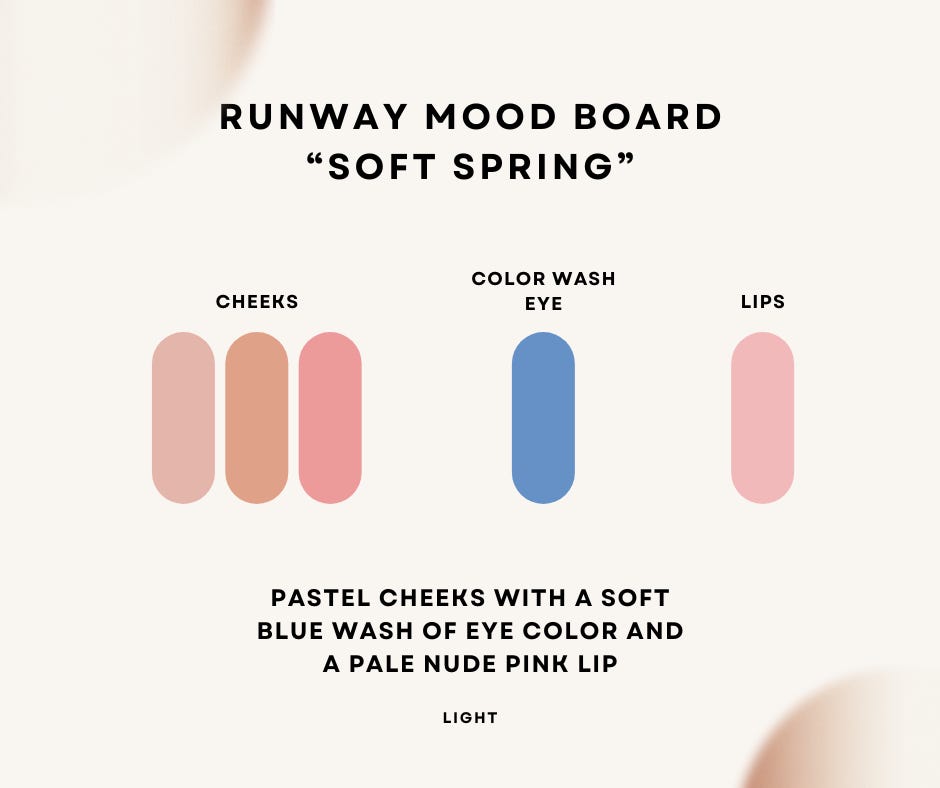
You are working on a runway show and have a face or color chart for inspiration. The mood is light, springy pastels with soft washes and whispers of color. No problem, until a deep skin model sits in your chair. Those whisper pastels go gray on your beautiful model, or they don’t show at all.
What do you do?
Both of the scenes are very common as not every piece of makeup is going to work on every skin tone. But no one is out there telling us how to analyze color and adjust it to us and to our skin color. We need more.
The 5 Ways to Analyze Color
There are really 4 ways that we can study a color and gather information about how it performs. The first is the color itself. What color is it? What color are we looking at? The second is the tone or undertone of that color. What is its base? This is especially important when dealing with neutrals and skins because they are not a pure color, they are a combo of colors mixed. And all mixed colors will have an undertone, a color within the color that is strongest. The third way is by looking at value (or depth). How light or dark is the color? Knowing the value of a color allows us to put it on a scale and study it against other things, like our face! And our face is the fourth and fifth way we analyze color because our face (or the face in the chair) is the canvas. How light or deep is our canvas? That is #4. And #5 is what is the undertone? If you know these 5 things, you will ALWAYS know what a color product is going to do.
So, when we see a red lipstick for example:
